
Keys to Understanding the Fall Protection Regulations for General Industry - Part 2
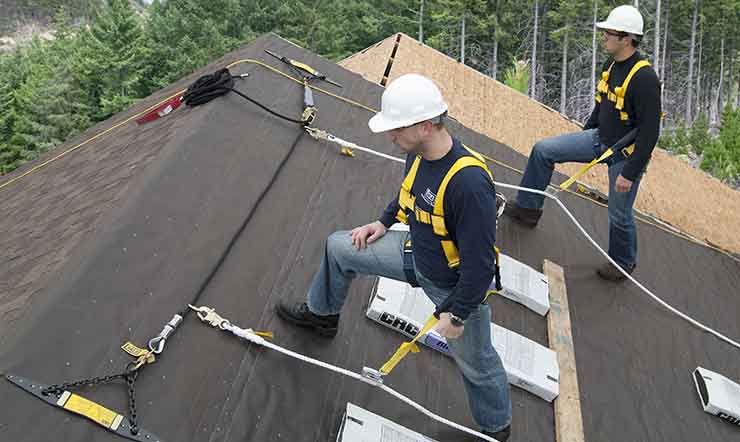
The General Industry 29 CFR 1910 Subparts D and I where changed significantly in 2017 to reflect the Construction standard 29 CFR 1926 Subparts M and L. This post is a continuation of Part 1, 7 Keys to Understanding the Fall Protection Regulation changes.
- The General Requirements in 1910.22
- Ladders 1910.23
- Scaffolding 1910.27(a)
-
Duty to have Fall Protection and Falling Object Protection
- Portable ladders;
- When inspection, investigation, and assessment of work is conducted prior or after all work has begun or is completed (if fall protection systems are not already in place);
- Fall hazards by the exposed perimeters of entertainment stages;
- Exposed perimeters of rail-station platforms;
- Powered platforms covered by 1910.67(c)(2)(v)
- Aerial lifts covered by 1910.67(c)(2)(v);
- Telecommunication work covered by 1910.268(n)(7) and (8)
- Electric power generation, transmission, and distribution work covered by 1910.269(g)(2)(i)
-
Roof Work
-
Deadlines
- Workers must be trained on fall hazards within 6 months of the rule being published in the Federal Register (This deadline has past as of December 2017)
- Workers that use equipment covered by the rule must be trained by 6 months of the rule being published
- 2 years for installing personal fall arrest or ladder safety on a new fixed ladder over 24 feet and replacement ladders/ladder section
- 2 years for outdoor advertising structures with fixed ladders over 24 feet to have a cage, well, PFAS, or ladder safety system
- Replace cage and wells with a ladder safety or PFAS on all fixed ladders over 24 feet in 20 years
-
1910.30 Training
- Fall hazards
- How to use PFAS (training should have be done by May 17, 2017)
- Training must be done by a qualified person
- The nature of the fall hazard in the work area and how to recognize them
- The procedure to be followed to minimize the fall hazards identified
- The correct procedures for installing, inspecting, operating, maintaining, and disassembling the personal fall protection system
- How to do proper hook-up, anchoring, and tie-off techniques
- Methods of equipment inspection and storage
- How to use a dock board and how to secure one to prevent unintentional movement
- Training must be understandable to the worker, and when using a fall protection plan the training must be in accordance to 29 CFR 1926.503(a) and (c).